On March 19, 2026, USDA Team Nutrition released the updated Crediting Handbook for the Child and Adult Care Food Program (CACFP). If you operate the CACFP —whether as a sponsor, provider, or center—this is one of those key resources that keeps you in compliance. At its core, the Crediting Handbook helps answer the question, ““Does this food count toward the meal pattern?”
While the handbook has been rewritten to align with current USDA policy wording and make it easier to use, nothing else has changed. Specifically, there are
No changes to CACFP meal pattern requirements,
No new policy tied to the 2025–2030 Dietary Guidelines for Americans and
Regulations remain unchanged
What’s New in the 2026 Revision?
The update focuses on usability. The goal is faster, clearer decision-making without having to interpret dense policy language. Here are the most meaningful additions:
Crediting Tips Built into each Section
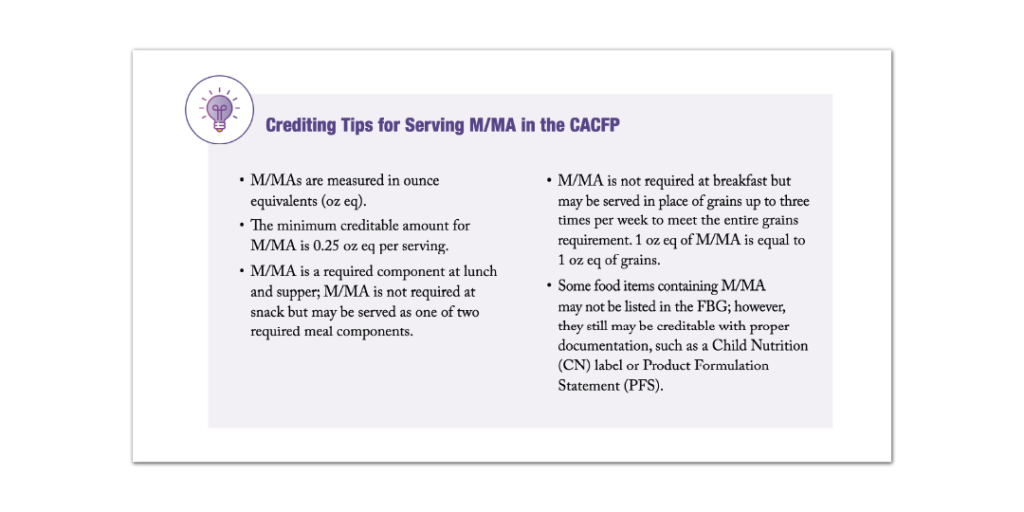
Each meal component section now includes quick-reference tips. These highlight common pitfalls and key rules—without requiring you to dig through paragraphs of explanation. Here is an example from the Meat/Meat Alternate section:
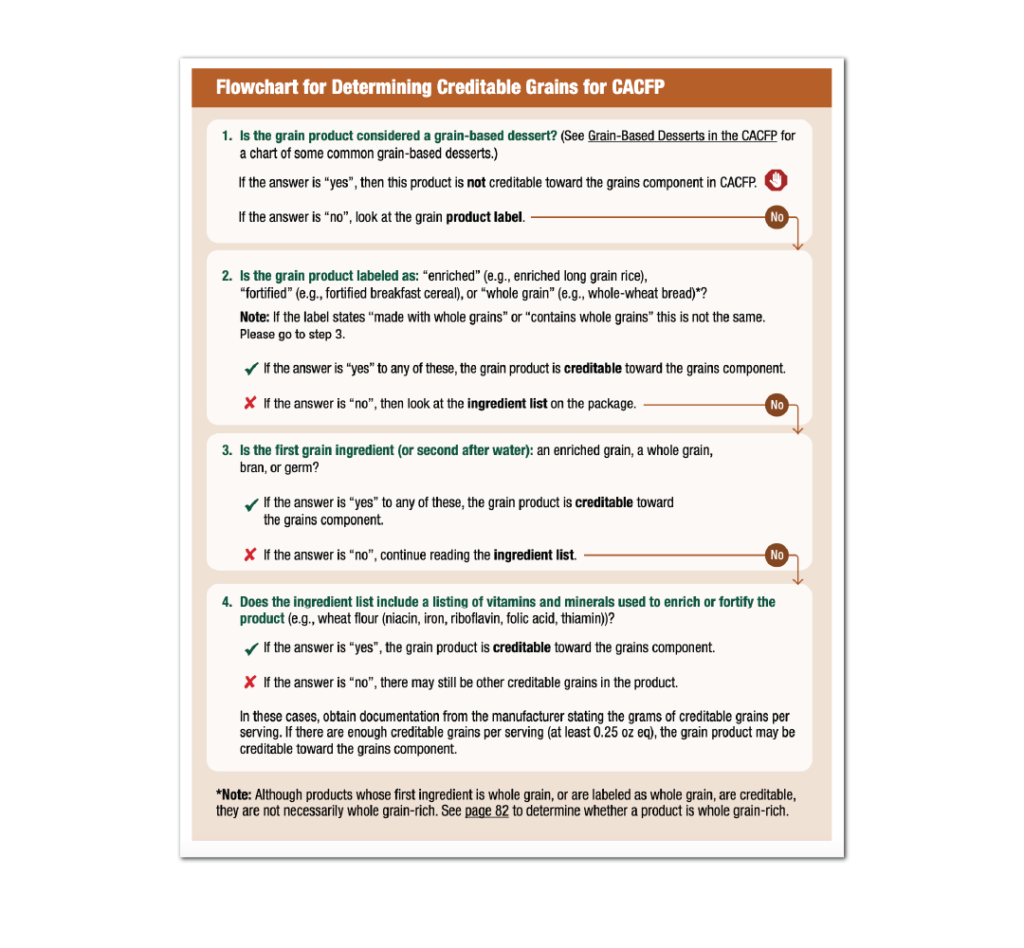
Grain Crediting Flowchart
Grains can be a confusing topic in the CACFP. The new Grain Crediting Flowchart gives you a visual way to answer:
Is this grain creditable?
Does it meet whole grain-rich requirements?
How should it be documented?
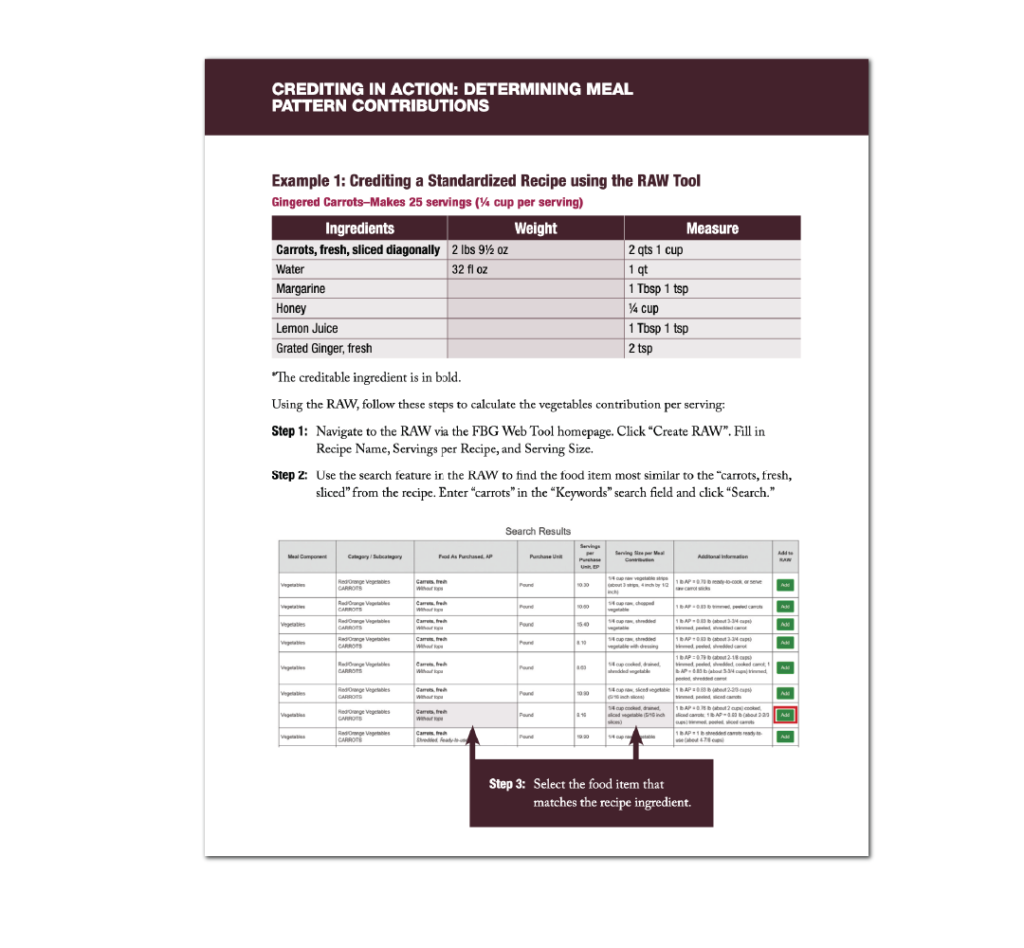
“Crediting in Action” Practice Section
This is a practical addition: real examples to test your understanding. It’s especially useful for training existing providers, centers or site or on-boarding new ones Here is an example of a Crediting in Action:
How My Food Program Helps
My Food Program aligns with the Crediting Handbook by building compliance directly into daily tasks. The Crediting Handbook explains what counts, and My Food Program makes sure it’s done correctly in practice. As users build meals, My Food Program make sure that food are credited for the correct component and can provide serving size prompts by USDA age range. Sponsors have the option for proactive edit checks to catch issues in real time—like missing component or incorrect quantities—so problems can be fixed before a claim is submitted. And importantly, My Food Program follows the handbook—if something isn’t creditable in the Crediting Handbook, it won’t show up as creditable in My Food Program.