
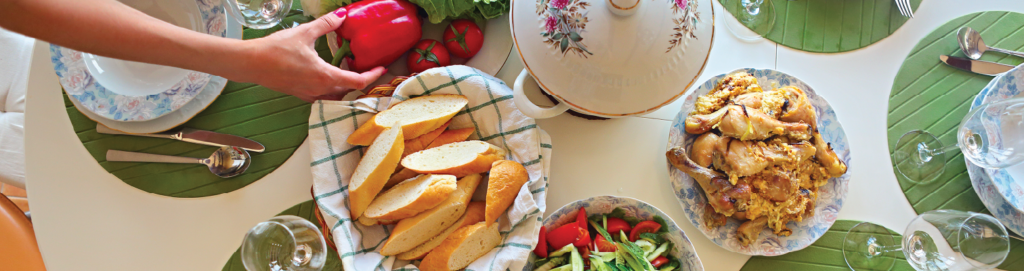
Family-style meals are more than a way to serve food. They are a powerful tool for teaching healthy habits, social skills, and independence. When done well, family-style meals also fully meet the requirements of the Child and Adult Care Food Program (CACFP). With planning and clear practices, programs can create warm, engaging mealtimes that support both child development and compliance.
What Are Family-Style Meals?
In family-style meals, children and adults sit together and eat the same foods. Meals are served in shared bowls or pitchers, and children serve themselves with support as needed. Adults model positive eating behaviors and help guide conversation. Family-style meals are recommended in early childhood settings and can be successfully adapted for after-school programs.
Why Family-Style Meals Matter
- Encourage children to try new foods
- Teach portion control and self-regulation
- Build language and social skills
- Create a sense of belonging and community
Making Family-Style Meals Work in
Early Childhood Programs
Making Family-Style Meals Work in
After-School Programs
How to Meet CACFP Requirements During Family-Style Meals
Offer the Full Required Portion
CACFP requires that each child is offered the full portion size for their age group.
-
Measure CACFP portion sizes ahead of time
-
Place the full required amount of each food on the table
-
Gently offer more food if a child serves themselves less than the minimum
Children may choose what and how much to eat, but the full portion must be offered.
Serve All Required Meal Components Together
To be reimbursable, CACFP meals must include all required components.
-
Place all components on the table at the same time
-
Do not hold foods back or require children to eat certain items first
Children are not required to eat every component.
Include Adults at the Table
Adults play an important role in family-style meals.
-
Staff should sit and eat with children
-
Adults should eat the same foods whenever possible
-
Model positive behavior and conversation
Support Child Choice Without Pressure
CACFP allows children to decide what and how much to eat.
-
Encourage, but do not force, children to try foods
-
Use positive and supportive language
-
Avoid pressure, rewards, or punishment related to food
Respecting hunger and fullness cues supports lifelong healthy habits.
Offer Milk According to CACFP Rules
Milk is a required component at meals for certain age groups.
-
Offer milk in a shared pitcher or in cups at the table
-
Serve only approved milk types for each age group
-
Allow children to pour their own milk when developmentally appropriate
Milk must be offered, but children do not have to drink it.
Follow Food Safety and Sanitation Practices
Family-style meals must meet food safety standards.
-
Require handwashing before meals
-
Use serving utensils for all foods
-
Replace dropped or contaminated utensils
-
Keep hot foods hot and cold foods cold
Good food safety supports CACFP and licensing requirements.
Keep Accurate CACFP Records
Proper documentation is required for reimbursement. My Food Program supports this by providing easy-to-use tools that help programs accurately track meals, meet CACFP requirements, and stay organized for reviews and audits.
-
Record meals at the point of service
-
Confirm all required components were offered
-
Maintain menus, meal counts, and production records
Family-style meals are fully reimbursable when documented correctly.
Train Staff for Success
Staff consistency is key.
-
Train staff on CACFP meal patterns and portion sizes
-
Practice family-style meals during training sessions
-
Review how to support children without pressure
Ongoing training helps prevent compliance issues and builds confidence.
Helpful Resources
USDA Child and Adult Care Food Program (CACFP) meal pattern guidance
RealFood.gov for balanced meal planning tools
A Positive Mealtime Experience